
SpeechTherapy
Communication is how kids ask for what they need, share what they think, make friends, and learn at school. Pediatric speech-language therapy at Little Land supports the full picture — understanding language, using language, speaking clearly, eating safely, and connecting socially — through play that pulls real words out of real moments.
What is Speech Therapy?
What does a Speech-Language Pathologist actually treat?
Speech-language pathologists (SLPs) are trained in much more than just 'pronunciation.' We treat receptive language (understanding), expressive language (using words and sentences), articulation (speech sound clarity), fluency (stuttering), voice, social communication, augmentative & alternative communication (AAC), and feeding/swallowing. If a child has trouble with any part of communicating or eating, an SLP can help.
How early can speech therapy start?
Very early — sometimes by 9–12 months. Early intervention is one of the most evidence-backed predictors of long-term outcomes for late talkers and kids with communication delays. Waiting to 'see if they catch up' often means missing the most efficient window.
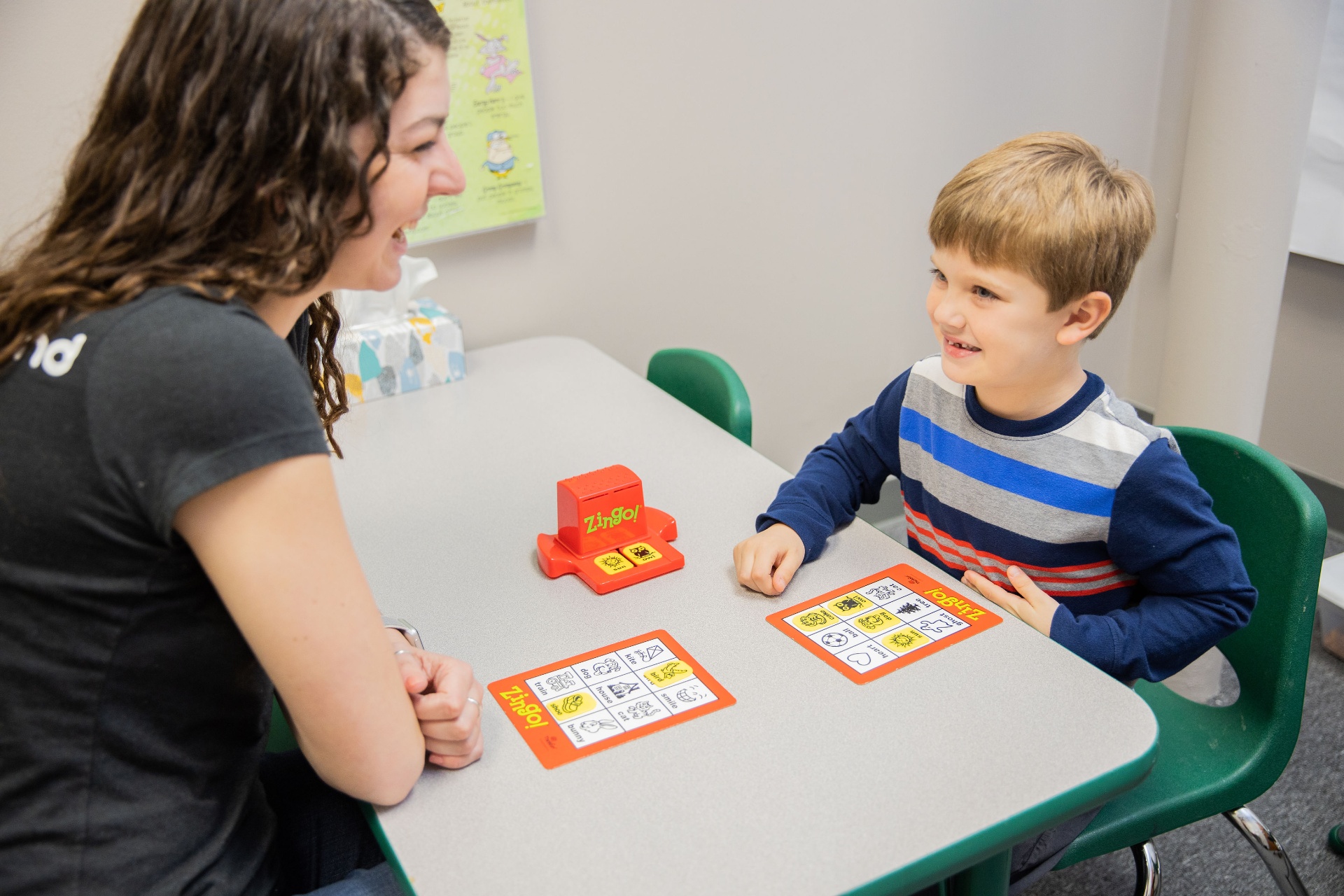
Language explodes during play. A pretend-cooking game can target nouns, verbs, requesting, sequencing, and turn-taking — all in five minutes. Our SLPs follow your child's interests, set up motivating choices ('train or car?'), and create thousands of natural opportunities for communication every session.
Skills we work on
- Receptive language (understanding)
- Expressive language (using words & sentences)
- Articulation & speech clarity
- Stuttering & fluency
- Social communication (pragmatics)
- AAC & alternative communication
- Early language for late talkers
- Feeding & picky eating
- Bilingual language support
Signs to watch for
These don't diagnose anything — but if several feel familiar, an evaluation can give you clarity and a plan.
- •Uses fewer than 50 words by age 2
- •Not combining two words by age 2
- •Hard to understand by age 3 (even for family)
- •Frustration or meltdowns when trying to communicate
- •Doesn't respond consistently to their name
- •Struggles to follow simple directions
- •Avoids eye contact or back-and-forth interaction
- •Stuttering that lasts more than 6 months or causes distress
- •Limited food repertoire or trouble chewing/swallowing
Who it helps
- Late talkers and children with language delays
- Kids working on articulation or fluency
- Children with social communication challenges
- Families wanting bilingual support
What a session looks like
- 1
Connection & choice
The therapist meets your child where they are and offers motivating activity choices to spark engagement.
- 2
Targeted play
Books, pretend play, sensory bins, and games are set up to elicit the exact sounds, words, or social skills on your plan.
- 3
Reps that count
Therapists model and elicit dozens of meaningful trials inside one game, not isolated drills.
- 4
Coach the caregiver
We end with a quick coaching moment so you can use the same strategies at home all week.
Carryover is everything
Sessions move the needle, but the real magic happens at home. We send strategies you can use during dinner, bath time, and the car ride to school — small moments that add up to thousands of language reps.
Helpful next reads
Plain-language guides for parents starting therapy.
Frequently asked
When should I worry about speech delays?+
Visit our Milestones page to see typical communication milestones by age. If anything feels off, an evaluation is the fastest way to get answers — early intervention is highly effective.
Will my bilingual child get confused?+
No. Decades of research show that bilingual exposure does not cause or worsen language delay. We support both languages and coach families in their home language.
Milestone tips, classes & news — straight to your inbox.
Add your number for occasional text reminders about open play, camps, and parents night out. Unsubscribe anytime.