
OccupationalTherapy
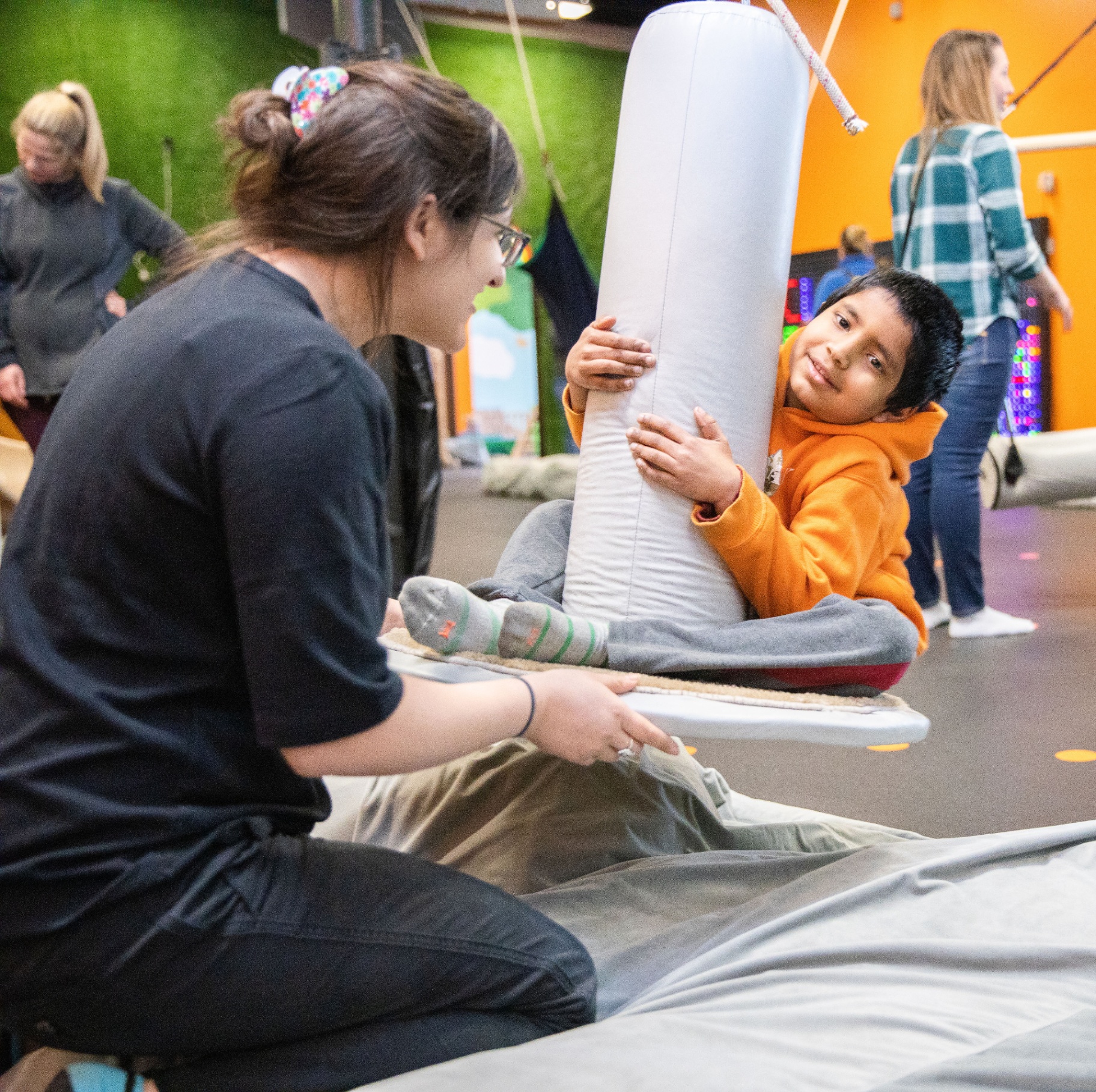
Kids have a job — to play and learn. Pediatric occupational therapy (OT) helps children build the everyday skills that make that job possible: holding a crayon, tolerating a tag in a shirt, getting dressed, joining a game with peers, sitting still long enough to listen to a story. At Little Land, our OTs do this work in our open play gym so the skills your child practices on Tuesday show up at home, school, and the playground.
What is Occupational Therapy?
What is Occupational Therapy, in plain language?
An occupation is anything a person needs or wants to do every day. For a child, that's playing, learning, eating, sleeping, dressing, and getting along with others. Occupational therapists are trained to look at the whole child — their body, brain, senses, and environment — and figure out exactly what's getting in the way of those daily activities. Then we build a plan to remove the barriers, one playful step at a time.
How is OT different from PT or Speech?
Physical therapy focuses on big muscles and how the body moves through space. Speech therapy focuses on communication and feeding. Occupational therapy lives in between and around — fine motor skills, sensory processing, attention and self-regulation, visual perception, social-emotional skills, and the self-care routines that make a kid feel capable.
Who decides what we work on?
You do, with us. After your child's evaluation, we sit down together and choose goals that matter to your family — whether that's tying shoes before kindergarten, eating without melting down, or making a friend at the park.
Children's brains are wired to learn through play. When a child swings, they're building core strength and vestibular processing. When they squish dough, they're strengthening hand muscles for writing. When they navigate the climbing structure, they're motor planning, problem-solving, and regulating their nervous system. Our therapists hide the 'work' inside activities your child genuinely loves — which is why kids ask to come back.
Skills we work on
- Fine motor & handwriting
- Sensory processing
- Self-regulation & big emotions
- Visual motor & visual perception
- Self-care (dressing, feeding, hygiene)
- Attention & executive function
- Motor planning & coordination
- Play & social skills
- School readiness
Signs to watch for
These don't diagnose anything — but if several feel familiar, an evaluation can give you clarity and a plan.
- •Avoids messy textures, certain clothes, or specific foods
- •Struggles with buttons, zippers, utensils, or scissors
- •Has frequent meltdowns that feel out of proportion
- •Walks on toes, crashes into things, or seeks constant movement
- •Avoids climbing, swings, or playground equipment
- •Has trouble sitting still for stories or meals
- •Holds a crayon awkwardly or tires quickly when drawing
- •Has a hard time following multi-step directions
Who it helps
- Children with sensory processing differences
- Kids working on fine motor or self-help skills
- Children with developmental delays or specific diagnoses
- Families looking for an inclusive, supportive setting
What a session looks like
- 1
Warm-up & connection
Your child says hi to their therapist and chooses a 'just-right' starting activity to get their body and brain ready.
- 2
Targeted play
The therapist guides 2–3 activities chosen to push specific goals — climbing for core strength, scooping for grasp, obstacle courses for motor planning.
- 3
Regulation & integration
We weave in heavy work, deep pressure, or quiet time so your child stays organized and successful throughout.
- 4
Parent handoff
Your therapist shares what you saw, what's coming next, and one or two simple things to try at home.
Why our open gym matters
Most clinics treat in a small private room. We treat in a 3,000+ square foot gym, which means your child practices skills with real distractions, real peers, and real-life unpredictability — exactly like the world they're heading back into.
Helpful next reads
Plain-language guides for parents starting therapy.
Frequently asked
How is OT at Little Land different?+
Most clinics use a single treatment room. We hold sessions in our open play gym, so your child practices skills alongside peers and you stay involved.
Do you accept insurance?+
Insurance acceptance varies by location. Contact your nearest clinic to confirm coverage.
How long until we see progress?+
Most families notice changes in 6–12 weeks of consistent sessions, though every child is different. Consistent attendance is the single biggest factor — see our Attendance & Progress page for why.
Milestone tips, classes & news — straight to your inbox.
Add your number for occasional text reminders about open play, camps, and parents night out. Unsubscribe anytime.